Showing posts with label hunting. Show all posts

Friday, March 6, 2020

The first time.


Can you remember the first time you went hunting or fishing? Who took you that first time?

I grew up beside a pond. When I say beside, it was literally within 100 feet of the front door. My dad and grandfather and step-grandmother loved fishing. Once spring rolled around, it was not uncommon at all for Dad to grab a fishing rod and go over to the bank and cast for an hour or so.

My first fish came with my mom. She purchased a plastic rod that had a plastic hook and plastic fish. I was beside the bank one day with her, slamming the plastic hook into the water, yanking it out, and slamming it back in. Remarkably, a bream somehow was in the wrong place at the right time, and it snagged onto that red plastic hook. I was both excited and petrified at the same time.

But as I got older, and by older, I mean like five years old, I would fish nearly every day in which the weather would cooperate. Why? Because I had seen my dad do it day in and day out. It was what you did. If I wasn’t at the pond, I would walk to Silver Lake and fish along the banks there. Sometimes my dad would be with me, sometimes he would be at work if on a weekday. The wildlife club had a building there and Mr. Barnes ran it each day. He was basically a temporary babysitter.

Times were much different then. I guess that is how things work out after half a century. But those times were the influence to get me outdoors to hunt and fish and camp.

This is one of our first challenges if we believe these outdoor activities must continue.

We no longer have the same schedules. Our workplaces are open longer and during more days. Weekends are no longer a time of rest and relaxation. People don’t get off of work at 5pm, and if they do, many may have commutes lasting an hour or longer. We have lost those brief opportunities that once meant so much.

This is where we need to better address our time management skills. Sounds like something you would hear at a meeting at work doesn’t it? Unfortunately, it is true though.

We come home tired. Heck, we often come home beat. I understand. I’m the same way. But where we once couldn’t go by the lake without seeing a dozen people standing along the shore with a cork in the water, we can’t go by the lake now and find anyone fishing. When we go to the park with friends, family, and most of all children, they are not accustomed to that. Instead they only see people walking or sitting. There is no connection to outdoors other than it being a scene, and they can find better scenes graphically created on their game console.

Even if you cannot take someone new to fishing or hunting with you, simply being out there is enough to spark conversation between others. It is what helps bring that little bit of intrigue and inquisition into what you find attractive about it. It is how a small kid that is full of questions may get to the point of asking his or her parent if they can go fishing.

We don’t get many of those opening title sequences from the Andy Griffith show anymore with Andy and Opie walking to the pond with the rods over their shoulders. But I bet you have many fond memories that resemble that form when you first started fishing and hunting.

Monday, March 2, 2020

We are in a crisis. Part 2.


I wrote about the crisis currently going on in the United States with declining hunting and fishing license sales despite a growth in population over the past couple of decades. The dollars generated from license sales goes towards protecting species that are in decline or are in an unstable number.
What can we do other than take someone fishing or hunting and hope they catch the ‘bug’ to continue an outdoors life?
It is easy to find problems. Solutions are much harder. However, as the late Dr. John Dewey once stated, “a problem well stated is a problem half solved.” We know there is more obstacles in the way of converting current generations and recruiting future generations for outdoors activities that include hunting and fishing than ever before.
At one time, it was a necessity to hunt and fish in order to survive. Agriculture became prevalent and efficient to the point that food is plentiful and available to all at low costs both in money and effort. Our world has slowly shifted from a hands-on type of civilization to an efficient digital low mobility existence in which communication can be done in milliseconds at virtually no cost and products and supplies can arrive from thousands of miles away in less than two sunsets.
We have a vociferous minority that can demand results against hunting or fishing that often gets lots of media attention and fear from advertisers marketing to certain activities. Because of this the general population loses exposure to these activities unless on very specific networks.
Older generations either die off or age to the point that the activities become harder to participate in, limiting the passing of the heritage from one generation to the other. The middle generations get wrapped up in work where weekends are no longer the same for everyone as nearly every business is open seven days per week. And the younger generations, who do get off during the weekends from school do not have the parent, family member or other adult mentor that is available to take them out, and instead spend their time at a gaming console or in front of the computer.
Sure, there are some other smaller factors, but in short, we have all become busy with things that take our time away from hunting and fishing. Probably the biggest of the other factors would be cost to get started, as you have to find land to hunt and water to fish, which isn’t always public reserves, as well as the entry costs of gear, ammunition and tackle.
So, what can we do to put a dent in this crisis? We have to do multiple things. My personal take is to expand on something I am doing. Sure, this column gets out to many people over many newspapers. Yet, show me a kid under 18 that reads a newspaper. I used to. Mainly, I would look at the boxscores form the games the night before and read the comics. That isn’t the case any longer. Now, if it isn’t on social media, reddit or YouTube, the 18 and under generation won’t see it.
My goal is to create a YouTube channel that is informative, yet attractive to that generation. Currently there are several big channels, however they lack in appearance for the most part. I am going to create something that is a mixture of River Monsters and Casey Neistat. This won’t be your Outdoors Channel sponsored content. This will be short doses with quick hitting action that at the same time educates.
There are other ways to try to bring in new people, and I think we need a mixture of it all to be successful. This is the way I am going to participate.
If you are interested in helping, whether with ideas, donations or just words of support, I would love to hear from you at billhowardoutdoors@gmail.com. We can do this together.

Friday, February 28, 2020

I'm back. But I never left. And we are in a crisis.


We are in the midst of a crisis.
I know we hear that a lot. There is a reason. When we are told that something is in such dire circumstances that the scenario is at a tipping point to where only a correction made immediately is the only way to have favorable results or everything is lost, it instills action.
Climate change is an example. We have an entire generation that is being taught blindly that without something changing last week that the earth can only survive for a little over a decade. The sense of urgency is important to create change. That sense is usually brought on by fear of something undesirable.
You can even hear it in sports. If a team isn’t performing well and it is approaching midseason, you will hear mention of the moment being critical, whether it be the second half of an important game, the upcoming game, or the next series of games. Crisis mode has been created to put a sense of urgency and complete focus onto something in order to create the change needed to be successful in the team’s goals.
Well, we are in crisis mode in the hunting and fishing community. This crisis is not only bad for the hunting and fishing community, but for natural resources and wildlife as well.
Two decades ago, North Carolina had 399,045 licensed hunting and fishing individuals that created just under $9 million in gross revenue. South Carolina had 263,045 creating $6.7 million. The United States in whole reported 15.7 million licensed hunters and anglers resulting in $688 million.
These monies are important. License sales go to protecting endangered and threatened species, providing habitat for those species, as well as employing officers that focus strictly on those activities.
By contrast, last year North Carolina had 592,564 licensed hunters and anglers bringing in $10.3 million in revenue to go to those activities. South Carolina had 200,912 licensed individuals resulting in $8.6 million. The US as a whole? 15.5 million with $896.4 million revenue.
While we have seen growth in numbers for both NC and SC in licensed outdoorsmen, the United States has lost numbers. We haven’t even mentioned the cost differences from twenty years ago.
North Carolina also increased population by nearly 3 million people over that same time period. For North Carolina, the licensed individuals (I keep mentioning it this way because looking at only license sales doesn’t give a perfect number as many people have multiple licenses) kept up with the population growth. South Carolina on the other hand, lost 62,000 licensed individuals over twenty years while having a population increase of 1.3 million.
South Carolina is an example of what is happening across the country.
With a loss of 2 million hunters and anglers in the US over the twenty-year period while having a population increase of over 50 million, we are losing the ability to protect these species and habitats as we need to. License sales used to nearly supply all the revenue needed. The outdoors community was a self-funded endeavor. Now, we have bipartisan bills in congress providing monies from the general funds as well as allowing more freedom in the uses of monies from past legislation such as that from the Pittman-Robertson act to both protect the species and encourage and recruit new hunters and anglers.
With a world that has increasingly pulled youth to new activities (specialized sports and training, television and video games to name a few), and an older generation that has increased responsibilities and longer work hours in a faster running world, we will all suffer.
The monies in the past helped turn around the potential losses of species such as whitetail deer and Canadian geese to where they are plentiful and thriving. Now, we may end up seeing species suffer.
And this is a true crisis for everyone.

Wednesday, March 2, 2016

New N.C. Regulations Address Potential Elk and Alligator Seasons


I have already tackled proposals that were coming down the pipe in North Carolina for both alligator and elk hunting seasons in previous columns. On February 11, 2016, the North Carolina Wildlife Resources Commission (NCWRC) held votes for rule changes to the regulations, and two of those that came up in the vote were the alligator and elk management.

Public meetings were held in each district throughout the state to gain input from the hunters and non-hunters alike on topics such as these two. In all there were 37 different rule changes brought to the forefront.

Of the rule changes, 34 were approved as taken to public hearings. This means you and I had an active voice in how to approach the potential rule changes. One gameland rule was amended and approved, bringing the total approvals to 35 of 37 proposals.

One rule was disapproved, that being the regulation and approval of alligator hunting in North Carolina. This in essence now states more input from biologists would be needed prior to opening a season for alligators. The commission did open the possibility of a nuisance and depredation clause that could be handed down via proclamation from Gordon Myers, the executive director of the NCWRC. In other words, it may be possible for a property owner to take an alligator through a special permit in which the alligator causes or can cause harm to land and/or property.
An alligator season is not in the cards anytime soon in N.C.

One rule was withdrawn from consideration regarding the Eastern cougar being removed from a federally listed species, as state law requires the species to match the federal listing. It was up for approval because it is expected to be removed from the federal list, however it has not happened as of yet.

As far as the elk hunting proposal, the commission opened the door for elk hunting in North Carolina, although there will be no permits issued for the coming 2016-17 season. Much is speculation at this point, and I have been vocal on this matter myself. Our herd has not been managed to this point in a way to allow any abundance of hunting, as the herd has been very slow to grow. We did not take the same approach Kentucky did for instance.

It does look like the commission is taking the challenge seriously though. It has been speculated the permit for hunting elk in North Carolina may be one of the hardest tags to get in the country; perhaps as few as five will be available each year.
Hunting elk in NC could be one of the hardest tags to obtain in the country.

Some have noted they expect a commissioner’s or governor’s tag that can be issued or auctioned off to anyone. There is also some thought that a tag will be reserved for a youth hunter as well. Others have stated that the Rocky Mountain Elk Foundation may receive one, and then the remainder either dispersed through a lottery draw or some type of auction.

Myers also stated he plans on working with the Eastern Band of Cherokee Indians as well as other partners in establishing the proper metrics to guide a permit only hunt in the near future.

Based on how I have seen other states handle hard to hunt and limited hunts for specific species, I will share my beliefs in what should happen. I invite any and all readers to share their thoughts as well either by letter to the editor of this newspaper or to me personally at billhowardoutdoors@gmail.com.

Especially in the early going, I would like to see a resident-only lottery permit system put in place. For instance, Georgians have been vocal about their disapproval for non-residents pulling alligator permits in their state and Georgia issues more permits for alligators in a single zone than we have total elk population in North Carolina.

I am fine with both a governor’s tag and a youth tag. I do think the governor’s tag should be an auction style bid in which the most money proposed gets the tag. This money should go directly towards the conservation of the herd.

Monies from the lottery for the remaining tags should go with the auctioned tag and used in possibly expanding the herd by bringing in more animals. The one question here, which I am back and forth on, is the possibility of introducing a disease detrimental to the herd, so care will need to be taken.

Obviously there is much more to be looked at here, but I am growing more confident each day that we may do this correctly.

Friday, October 18, 2013

One of the Most Dangerous Animals

It was just after daybreak. I had watched her for about 30 minutes in the dark as she worked her way across the field.  She was both beautiful and dangerous. In fact, if you think about it, most things in nature share those two attributes.
Mount Everest is one example. The largest mountain in the world has enticed many a climber with her glorious beauty. She is also a killer. Nearly everyone that has ventured to the summit has come back with either parts of their bodies missing and damaged through frostbite or falls or parts of their soul grieving for the bodies they spot on the way to or from the peak. It is too dangerous to return the fallen, so the climbers that did not make lay scattered throughout the mountain. Having made authors such as Jon Krakauer and Anatoli Boukreev famous with their stories of Everest’s ferocity, it still isn’t close to causing the death, destruction, and disease of the beast that was in front of me.
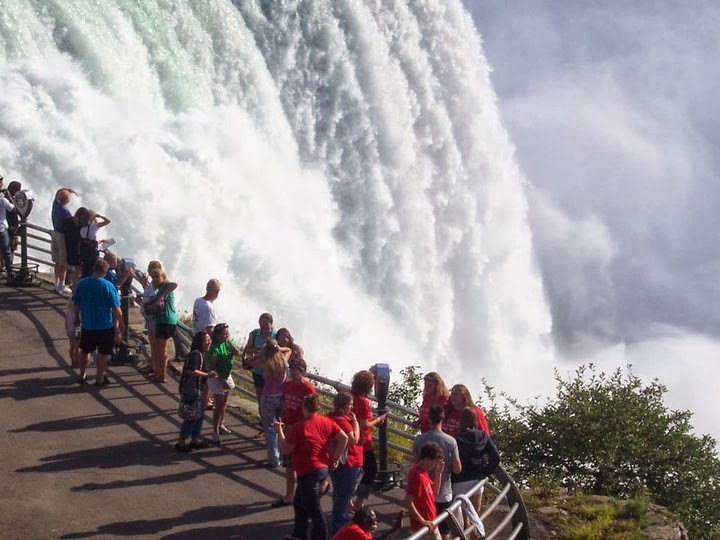
Niagara with all her history and splendidness is also a devout widow-maker. She has power that few things or places on this world could ever compare to. Many times you can visit something that is regarded as larger than life and then once you get there you realize “wow, it’s not nearly as impressive as I thought it was.” Not Niagara Falls. It actually is beyond what you can imagine. The force of the water slapping the rocks below, the spray that results towering higher than any building it is very impressive. From miles away the sound and spray can be seen. Many daredevils have ventured down the river on their way to the drop. Only a few have survived. Yet it still does not contend with what stood just yards away from me.
Yes, this was the moment. Her kind was scarce just a few decades ago. Through both management and mismanagement she began to flourish however. In fact she is so common throughout the state that North Carolina has allowed unlimited harvest. She destroys landscapes. She decimates food crops. And during the months of October through December she especially burdensome to travelers. She fears not the would-be driver and often will head for direct impact. She also shares parasites, mites, and ticks with both people and pets.
This would be my chance to turn the tables. It had now been nearly an hour after I first saw her. I was not sure I would get an opportunity. She walked from left to right out of the swamp, occasionally pulling up soybeans as she strolled through the field. Patiently I waited. For some reason she turned. I remained still and steadfast sitting on the lock-on stand. She made another turn offering my movement to grab my bow without her noticing. She then turned back toward me once again. I could tell she was completely unaware of my presence. Her ears twitching away from me and back toward the swamp gave away her lack of insight. A little closer, that is all I needed.
Then she walked towards the stand and was only a few yards away. No clear shot for her vitals, I knew I still had one shot available. Nearly directly under me I set the sights. With one steady pull the string and arrow locked in place on the Pearson Stealth II. My right index finger slowly moved up and over the release trigger. Instinctively, the pin glided to the intended point of impact and the trigger was grazed.
The spine shot laid down the doe immediately. Thirty seconds later and another deer would be done.

Thursday, January 24, 2013

Firsts

Dove hunting was by far my favorite hunt growing up.  The weather was usually nice with a touch on the hot side.  Well, it was actually very, very hot, but as a pre-teen and teen and a baseball player, 90 degrees seemed normal.

Duck hunting on the other hand, just wasn’t my cup of tea.  Don’t get me wrong, I liked shooting.  But duck hunting was alien to the bird hunting I was accustomed to.  It was cold for one thing.  Bitter cold.  The wind was usually howling and for some reason that God can only explain to me, if it rained, it meant the hunt would be even better.  Really?  Cold, wet, and windy meant this would be a good hunt?

But this was not all!  My dad and I would spend several hours getting the boat ready, packing the decoys, getting our clothes situated then drive several more hours so that we could get in a boat in this terrible weather, drive the boat in dark for another 30 minutes, throw out several dozen plastic birds, and then sit in a blind to wait for the sun to come up.  And yes, I hated the ‘early’ part of the hunt also.  Dove season would come in at noon.  Ducks, they flew thirty minutes before sunrise.  Curse those ducks!

I think I was around thirteen when I shot my first duck.  Nothing special.  Not a magnificent shot at all.  In fact, the hen ruddy duck just kind of flew in and landed.  We didn’t call her in.  I don’t think we noticed her until we saw and heard the splash of her landing.  We scared her up so I could get the shot.  But it was my first duck.

Over the years, especially the last ten or so, I enjoy duck hunting much more.  The variety of species intrigues me and I am like a kid in the zoo when I spot one that I don’t usually see.  In all likelihood though, I think my taste for hunting ducks lies mostly on lifestyle.  Not the lifestyle of living large, or even living lower.  More in the lines of my day is not taken completely away by heading out for ducks.  My wife is less frustrated than if I sit in a stand all day and show up an hour after dark.  I still do not like getting up early, but it is tolerable and I have more discipline as an adult to force myself to get out of bed.

My oldest son’s first experience with hunting waterfowl had the makings of both a miserable hunt and a first class experience.  We hunted swans near Lake Phelps in the northeastern part of the state.  It was hard to find camo for his small frame, but we pieced some things together.  We also had absolutely no luck in finding BB steel shot for the 20 gauge side by side he would use.  He shot 4 shot instead.  The #4s are great for ducks such as woodies, but I was warned that the swan was so big he would not be able to bring one down.  Still, we had to use what was available.

The party hunted from a ditch in a field that must have been more than 10,000 acres and the guide was calling only by mouth with his hands cupped over his lips.  There were about a dozen of us hunters.  Turner was too short to reach from one side of the ditch to the other, so he settled his feet in the bottom and leaned against one side.  Within seconds his boots were completely underwater and he whispered to me that they were soaked.  I kicked with the back of my heel a small shelf into the side of the ditch and he dug his heels in the shelf to stay out of the water.  I could only sympathize for him about how the hunt was starting.

The first time he used the Ithaca 20 gauge was just a few months before on opening day of dove season.  He didn’t even shoot a box of shells, but did bring down a few birds.  I saw he was trigger shy.  He was still learning.  When to shoot, when not to shoot, would someone be upset if he missed, would others laugh; all those questions were certainly flowing through his mind.

This day was not much different.  I shot five times that day to get my first swan.  The swan I shot was actually a follow up shot after Turner’s first shot.  Turner had hit him, but he didn’t go down.  Turner took one more shot that day, folding a young swan nearly 70 yards away.  The small shot with a small shotgun that was fired by a small 9 year old was no small feat.


David Tomlin (Harmony, NC) and his son in 2009
I look back on this day after reading an email from David Tomlin.  David shared with me how his hunts changed after having a child.  Then he emphasized ‘for the better.’  I realize how blessed I am to have been with my son on the swan hunt, the dove hunt, and the many other hunts we have done since.  I realize how blessed I am as I teach my daughter the same skills.  I anticipate the opportunity to teach my youngest son and experience everything again for the first time through his eyes.  And as I think about these events, I realize how blessed my father and grandfather were to experience the same with me as I encountered my ‘firsts.’
 
Definitely for the better.

Thursday, December 6, 2012

Hunting Matters

The numbers are in.
Each year the North Carolina Wildlife Resources Commission releases a report showing both current and historical data related to licensed hunters, the hunter education program, and the number of hunting incidents and fatalities.  Mining through the data can tell you how successful the program is working. 
And in North Carolina, the program is working well.
The 2011-2012 hunting season saw an increase of over 16000 licensed hunters in North Carolina over the year before.  While that is significant in itself, there is more to the story.  The nearly 522000 licensed hunters are the most North Carolina has had since 1994-95.  Sandwiched between those years were many high 300000 to mid 400000 licensed hunters.
Another story that can be deduced from the numbers is we are doing a very good job of bringing new hunters into the mix.  The 19246 hunter education students that were certified during that year were the second most since 1993-94.  These students are primarily taught by volunteer instructors who go through a weekend long class.  The instructors are taught on not only the course material, but various teaching methods that help the student understand the material thoroughly.
Why are we picking up these extra hunters?  It is not a simple one sentence answer.  I personally believe it can attributed to a large variety of factors.
First, society as a whole seems to be at least tolerant of hunting.  While anti-hunters are often the most vocal, the bulk of the population is either for hunting or has the mentality ‘to each his own’.  In hunter education classes we teach how to be ethical.  Ethics is not just whether you should do something that is lawful or not.  We discuss how bloody clothing and photos showing the impact wound can be a detriment to what hunting symbolizes.  Hunters are often painted as being barbaric, and scenes such as these only enhance that mentality.  It seems now, and this is totally unscientific, that the anti-hunters are often painted as the fringe now, and their antics are magnified consistently.
Television shows such as River Monsters, Man vs Wild, Survivorman, Swamp People, and Duck Dynasty have captured the imagination of the viewer as many have never seen nature in this way, nor have they seen the people that interact with nature do so in an ethical manner.  These shows may have done more for the acceptance, or at least tolerance of hunting than any other thing.
But society as a whole is not the only factor.  Programs such as the Hunting Matters mentoring program have been a success as well.  This program in particular asks the hunter to pledge to mentor a new hunter over the coming year and show them our hunting heritage.  In return for this promise, the hunter will receive a hat and bumper sticker from the NCWRC.
Walter Deet James, who began the Hunting Matters program a few years ago recently wrote a piece for me explaining why it is important to recruit new hunters.  Even though our numbers are increasing, our percentages as a nation are not due to overall population growth.  Deet explains that if our numbers do not grow in correlation to the overall population, it will become easy for hunters and outdoorsmen to lose their say, and vital programs for both hunters, anglers, and wildlife may lose their funding.
Funding from programs such as the Pittman-Robertson Act is how the state gets much of its money to furnish our volunteer instructors with material for the over 19000 students certified last year.

Wednesday, November 21, 2012

Chasing Ghosts

I have been chasing a ghost for awhile now.  Well, let me clarify a little.  I have not actually been chasing a ghost, more like a deer that just will not show when I need him to.  And by awhile, I mean since the second weekend in September.  A pursuit this long usually ends with one party or the other finally making a mistake or giving up.
When the rut kicks in, the old wise alpha bucks tend to lose their sense of survival.  So after a little over two months of sitting in the stand, a hunter knows the mistake may finally happen.  I missed a weekend of hunting, and I was anxious to get back in the tree to see if my ghost, my opponent so to speak, would finally let down his defense and give me the opportunity I have been waiting for.
My ghost, he has not been invisible to me.  In fact, we have grown to know each other well over the last couple of months.  I patterned him early in the season.  My first day hunting had me realize he had outsmarted me.  I knew he would go through one area, only to have a gut instinct that something had changed.  Sure enough, I moved my stand that evening and the next day I spotted him.  I found out he would hit the area early.  Real early.  3:30am early.  He would stay until daylight.  But for me to get in the stand and have a shot at him in daylight, I would have to beat him to the area.  This meant I had to be there before 3:30am.
So, the chess game stepped up a notch.  I moved my pawn, he countered with a knight.  I attacked with my rook; he placed his bishop in a defensive position for protection.  In other words, I would get in the stand at 3am, and he would come in at 4:00am.  Only he would leave about 30 minutes before shooting time.
The full moon tested my patience.  His entries into the field gradually became later and I followed his lead and would get an extra 30 minutes of sleep.  But oh that full moon.  One morning I must have been in the stand for over an hour without even hearing an owl hoot.  The darkness can cause you to see things that aren’t there, and make you miss things that are.  It was approaching 5am and the clouds would occasionally open up just enough to make shadows move.  I knew nothing was below me, but I could see the light colored dirt in the field for 60 or 70 yards.  I would catch a shadow move in my peripheral vision and slowly turn my head and widen my eyes to gather all the light I could.  Then I would figure out the shadow I saw move was the same shadow that had been there for the last hour.
The full moon then blew through the cloud canopy.  Having grown accustomed to the low light, it seemed as though I was looking at the field in the middle of the day.  I spotted a large off-white object way out in the field, maybe 150 to 200 yards.  I wondered if it may be my ghost, but figured it had to be just some brush reflecting the moon beams.  I looked behind me and the tree I was in to see a raccoon waddling about 15 yards from me.  At first I could not make out whether it was a raccoon or an opossum, but as he neared I could make out the bands on his tail and his burglar’s mask over his eyes.  I watched in amusement and curiosity as he neared the corn pile, walking circles around it for about 30 seconds before leaving.
I remembered the brush and looked back in that direction…only to see it in a different location.  I was able to watch it walk across the field toward me.  I knew immediately this was my ghost.
Part of me grew excited for getting the chance to confront this adversary once again.  The other part of me knew it was much too early for this game to play out to my advantage, as he did not look like he was in the mood to visit for any amount of time.
He approached the feed pile.  I gazed at him trying to see if I could make out individual tines on his massive crown of bone.  I could not.  What I could make out though was whatever he was wearing was wide and tall.  It nearly glistened in the moonlight.  And his body…my, what a body.  It was huge.  I had seen several does from this stand over the hunting season, and this bruiser was definitely not one of those.  As I figured, he had no intention of hanging around.  In fact, he never lowered his head to the bait.  He just stood there, looking at the horizon (in my direction, although I was nearly 25 feet high).  He then turned and walked toward my left, then behind me, and finally to my right.  In other words, he came straight to me, circled my stand, and exited the field on the other side.
He won.  The pursuit would continue.
So this weekend I had another chance to go after him after a brief reprieve.  The stand was almost like a sabbatical from the daily grind of real life.  The cool wind offered freshness that my lungs and mind gripped wholeheartedly.  Then I heard a loud crash behind me.
I came home from the hunt, unlocked the door, and walked up to my wife.  “How’d it go?” asked Susan.
I paused, wanting the right words to come out.  I took a deep breath.  “Well, he came out.  I watched him for 30 minutes.   No further than 10 yards away.”  I could see Susan’s eyes widening.  “I waited for the shot to present itself, as he was behind a limb.  Finally, he stepped that one extra step I needed.  I slowly gripped the bow and hooked my release to the string.  I flexed my fingers on my bow hand, conscious of the fact a white knuckle grip would cause me to miss the shot.  I slowly drew the string.  The 70 pound pull was non-existent with the adrenaline flowing.  I held it back for what seemed an eternity, although it was roughly 30 to 45 seconds.  Then I let off the draw.  I eased it down.  I couldn’t take the shot.”
My daughter who was listening in held her mouth agape with the revelation of what I had just said.  My wife asked “Why?  Why didn’t you shoot?!?”
“Because, I was worried if I had shot that squirrel, the deer I was after would never come out.”
So, as for me and my ghost, we will continue to taunt each other during the season until one of us makes a mistake or gives up.

Thursday, October 11, 2012

Living versus Surviving

While researching information on a story I am working on, I came upon some information on various Native American Indian groups in North Carolina.  I began looking where certain tribes were as well as the ties they had to other tribes.  Some of the tribes moved elsewhere after settlers came into the area.  There were some that had languages consisting of words from tribes located across North America indicating tribal mergers at some point and time.  I also learned of various living customs and techniques.
This weekend I was able to hit the deer stand on Saturday morning.  When I say Saturday morning, I mean at 3:30am.  Trail camera photos indicated the deer were hitting the field near my stand around 4am, so in order to get in and not spook them; I had to beat them to the field.  I packed my mp3 player which also has radio reception, threaded my earphones through my shirt and under my face mask, and sit back and listened while waiting for shooting light.
I do not listen to music on the radio much.  Usually, the only time music is played over my truck stereo is when my daughter changes the station when I take her to or pick her up from dance class.  The sequence is something like this:
Julianne presses the station preset as soon as she gets in the truck.
“What are you doing?” comes my quick reply to her actions.
“Changing the station.  No one wants to listen to talk radio.”
“Uh, yes I do.  It is my truck, my stereo, and I am listening to this.”  I press the preset back to the station I was listening to.
“Not anymore!” she shrieks while hitting the button again.
I again press the button, “Don’t touch it!”
Halfway home, she leans forward as if she has an itch, or is picking up something, or…anyway, she quickly presses the music preset once again.  It stays that way until I head to work the next day.
Now that I have run a tangent to my topic, let me get back to the real story here.  I was listening to Coast to Coast AM while waiting in the stand.  It is a show that runs overnight and usually deals with conspiracy theories, UFO’s, aliens, and the such.  Music puts me to sleep.  Talk radio, especially something like this, keeps me interested and my eyes open.
The guest that morning was discussing how to survive ‘the oncoming disaster.’
I’m not going to delve into the December 2012 lore, nor am I going to write about the two comets coming in 2013 and how they may actually be planet X and planet Niburu as told in Sumerian tablets.  A quick Google search on any of that will provide plenty of hours and websites of entertainment.  But I did start thinking about the whole survival thing.
I was listening to a man who was discussing how people do not know how to survive anymore.  People cannot live without certain amenities such as electricity, air conditioning, and plumbing.
And I thought to myself about the Native Americans and the European settlers and how they ‘survived.’  Not all of them survived, I know.  That is how we have the Lost Colony.  But survival now is a lot different than survival was back when this land was not yet the United States.  We have television shows starring people such as Les Stroud and Bear Grylls explaining to us how to survive.  Their shows throw them in the middle of nowhere for seven to ten days.  They have to SURVIVE.  Yet, the explorers and settlers and Native Americans did not only survive, they LIVED.  They knew how to make it in the world with what the world offered them.  Our world now bears little resemblance to the world then.
What secrets have we lost?  When did that basic instinct of living become a not-so-instinctive survival quality?
I learned some of the great hunting tribes would cover themselves in mud.  The purposes were many.  First, the mud would cover any human scent.  We now either have to use a spray, high priced clothing, or put ourselves in an enclosed building with windows on each side that allow us to go after our game from several hundred yards away.
Second, the mud offered camouflage.  Head out to a swampy area and pick up a handful of mud.  Then walk over to a tree such as a pine or oak, or even a river birch.  Hold your hand near the bark.  The mud is like the perfect camouflage.  So that high priced clothing that in Realtree or Mossy Oak with the Scentblock emblem costs how much?  The mud is a LOT cheaper!
Third, the mud helped battle those pesky insects.  You know the ones.  The North Carolina State Bird; the mosquito!  Horseflies, gnats, no-see-ums…they cannot penetrate a good caking of mud.  Why do you think pigs and elephants roll around in the mud?  It gets the bugs off!
Mud is just one secret that we no longer have in our arsenal of survival; of living.
I became a bit envious of the knowledge our ancestors had.  Sure we have electricity, air conditioning, plumbing, and even truck stereos with station presets and mp3 players, but our knowledge of luxuries is nothing compared to their knowledge of living.

Wednesday, October 10, 2012

Guest Post-How to Pack for a Hunting Trip

This guest post is brought to you by StowAway2.com, providing the highest quality hitch mounted
cargo carriers and racks on the market.


How to Efficiently Pack for a Hunting Trip

Hunting requires a significant amount of gear, and there’s always the chance you will bag a kill that will take up space in or on your vehicle. Packing for a hunting trip, therefore, quickly becomes both an art and science for many seasoned sportsmen.

Ultimately, practice is the best way to determine what you absolutely need on a hunting trip. The more hunting experience you person have, the better you will become at packing efficiently. Still, reviewing the guidelines below can help you refine your own approach to packing for a hunting expedition.

How to Pack for Your Next Hunting Trip

First, a general packing tip: We recommend creating a packing checklist. This preliminary step guarantees that you will have everything you need once you reach the wild. As you pack, go through your list and check off each item.

Next, group items according to where they will be packed. Experienced hunters recommend a day pack for on-the-hunt items; a duffle bag for clothes and small consumables; coolers for food and game; and lockable boxes for ammo, guns and archery gear.  Finally, depending on the size of your vehicle, you may benefit from having a roof-mounted or hitch-mounted cargo carrier to contain all of your camping gear.

In the day pack, include:

·         Lighter and waterproof fire starting kit, including matches
·         Flashlight with extra batteries
·         Knife for cleaning game
·         Camera/smartphone
·         Binoculars
·         Compass, maps and/or GPS system
·         Water bottle
·         Meat bags, dressing gloves
·         Hunting license

This pack should also include outdoor survival necessities such as a small first aid kit, toilet paper in a baggie, a space blanket, lip balm, sunscreen, insect repellant and energy bars or trail mix.

In the duffle or rolling bag, place your clothes for the trip. Some avid hunters recommend scent-eliminating systems such as Scentnote, which make it much more difficult for animals to smell you coming. Don’t forget to pack your hunter orange gear in this bag to ensure you remain visible to other hunters. As you select what clothing to bring, favor fabrics such as wool and fleece, which will keep you warm even when wet.

In the coolers, pack food for your journey. Don’t forget to bring an extra cooler or two for game.  You could also consider a hitch-mounted cargo carrier than can double as a cooler for your game (note: you’ll want to shop for these, not all can act as coolers). Double-check that you have everything you’ll need for cleaning your kills, including hunting knives, zip-close plastic bags and a sharpening stone. Hunting aficionados recommend bringing a portable generator and a vacuum-packing system, but this is excessive for beginning hunters who may not bag a kill on their first few trips.

In the lockable boxes, pack your ammunition, weapons and other hunting accessories such as a bipod or shooting stick. Think through what could go wrong in the wild, and pack accordingly. For instance, what will you do if your bow string snaps? Better pack an extra one just in case, as well as pliers and a bow stringer.

For a multi-day excursion, your list will also include camping gear. It’s not easy to find enough space for everything a memorable hunting trip requires. Rooftop cargo carriers are a popular solution for this common dilemma, or you can opt for a hitch-mounted cargo carrier.

Rooftop Cargo Carriers vs. Hitch-Mounted Cargo Carriers

Using a rooftop or hitch-mounted cargo carrier is akin to adding an extra trunk to your vehicle. Both will provide plenty of extra room. However, each storage solution poses its own advantages and drawbacks.

Rooftop cargo carriers are helpful, but they decrease gas mileage through drag, and gear isn’t easy to access when it’s on top of your car or SUV. (Most truck beds do not provide a large enough mounting surface for rooftop carriers.)

A hitch-mounted cargo carrier’s rear placement does not decrease gas mileage, and its rectangular shape makes it easier to pack bulky items. There are also models that feature swingaway frames to still provide access to the rear of your vehicle. And, some can even double as coolers for your fresh game.

Regardless of whether you choose a rooftop or hitch-mounted cargo carrier, take a few moments after your trip to reflect on what worked and what failed as far as hunting storage was concerned. With a little awareness, you can continually improve your own approach to packing for a hunting trip. Just think: The better you get at packing, the more quickly you can get out in the backcountry!

Thursday, August 16, 2012

Practice Makes Peace

I started late on setting up the hunting land this season.  Between bowfishing, writing, and work, I just haven’t had the time I can normally dedicate to prepping.  So this last weekend, I put together a couple of gravity feeders and set them up in a couple of locations that in the past has been productive.  I also set the trail cameras and did some brief scouting around the perimeters.
Even though I have been hunting recently for feral hogs, I have not practiced shooting as much as I usually do.  In fact, I only took 3 shots with the bow prior to the hog hunt to make sure my sights were still where they needed to be.  So I also made time to take a few practice shots after work one afternoon.
I put out the target and placed a small piece of paper near the center to represent the bullseye.  I paced off 20 yards.  Then I shot twice, laid down the bow and retrieved the arrows.  While I was cycling between reps of shooting twice and retrieving, I thought about the locations I selected for the feeders.  I thought about the monsters that were on the trail cams last year just prior to the opening of bow season.
I shot some more and retrieved some more.
I visually ran through the coming opening day on how I would hunt it.  Early in the season, especially if I have both nocturnal deer and ones that are hitting the feeders just after sunrise, I like to get out in the stand early.  By early, I mean I have been know to be walking to the stand at 3:30am.  Some say it is overkill.  I believe if I head out and scare off a few deer, once I have settled down in the stand the deer will be back out before day break.  I’m not getting the opportunity to skirt a field and get a shot at 200 yards.  My targets have to be within 40 yards.  20 yards preferably.
Hence the next 2 shots at the target from 20 yards.  I retrieved the arrows once again.
I thought back to some of the misses I have had.  Yes, I have missed before.  Unless we are face to face, then I have NEVER missed!  But I am human, and I do miss.  Just not often.
I focused on where I would need to be looking and where the deer usually would enter the field in the morning and evening.
I shot a couple of more arrows at the target.  I retrieved them.
Throughout all the thoughts and planning, I was completely at peace.  No distractions, no thoughts of work, no stress.  I was just pulling back the string and releasing it.  Two times each time.  Then I would retrieve the arrows.  I would often re-start a thought as I walked to the target.  I found myself thinking about the hunt while pulling back the bow and centering the bullseye.
After a little while my target paper resembled the stars on the bb gun targets at the state fair.  More holes than paper.  I reached down and grabbed a green leaf and put it up where the paper had been.  A fresh new bullseye.
I went back to my 20 yard mark and began the cycle again.  I noticed the green from the leaf blended in with the black and blue target backdrop.  It reminded me of how a deer blends in with the ground and soil just before shooting light escapes the horizon at the end of the day.  A few years ago I landed a shot on a deer some 40 yards away at the last possible legal moment to shoot.  I could not tell where the shot landed but I did see the deer disappear some hundred yards away in the field.
After coming down from the climber I went and searched for blood.  I could not find any.  After a few minutes of searching I did spot my intact arrow.  It was covered in red.  I had to postpone the search that evening.  The next morning I again could not find any blood near the impact zone.  But I did spot a rather large pool of blood 125 yards away from where the deer was hit.  It took less than 10 minutes to find the deer about 20 yards in the tree line after that.
I shot at the leaf; I retrieved the arrows.
I thought about the killing involved with hunting.  It seems heinous for someone to want to take a life.  That is before we dig into the matter a little more.  I wanted to focus more on this thought as I shot, trying to think in an anti-hunter’s point of view.  But as I tried, I pulled a couple of more arrows out of the leaf.
My thoughts moved to the premise that an animal is just as important as a human.  I do not believe this.  I believe God granted humans stewardship over this earth and its creatures.  Animals kill other animals.  We do not chastise them for this activity.  It is what they are and how they survive.  The same can be reasoned for us.  We were hunters long before we were contractors, technicians, doctors, lawyers, and accountants.  It is who we are and how we survive.
And if one can reason animals are as valuable as humans, then why are plants not of an equal basis as well?  They are living creatures.  Their life scale is just on a much different pace.
After retrieving the two arrows once again I pulled back and realized it was just too dark to keep shooting.  I then realized I had shot a LOT more than I have shot in any practice or competition.  The best I could count I had released the arrow over 60 times.  Maybe much more, but it was hard to count many of the holes.  I also noticed that I had very few misses.  In fact, I only saw 3 shots outside of a 2 inch radius.  I was relaxed and at ease.  I was lost in the hunt, and the thoughts of the hunt.  I had a hard time recalling individual shots, yet I turned in one of the best practices I have ever had.
I was at peace with myself.